
This section gathers the material the Rainbow Pride Foundation has produced for community members, service providers and decision-makers. The resources are grouped into four parts — Who We Are, Down By The River, Reflections and Recommendations — and each part can be read on its own. Together they describe the community the foundation works with, the context in which people live, what we have learned, and what we believe should change.
Who We Are
Who We Are introduces the communities at the centre of this work: lesbian, gay, bisexual, transgender, queer and intersex people across Fiji, their families, and the allies who stand with them. It addresses the language people use about themselves, the assumptions that outsiders often bring, and the diversity that exists within a community frequently described as if it were a single group.
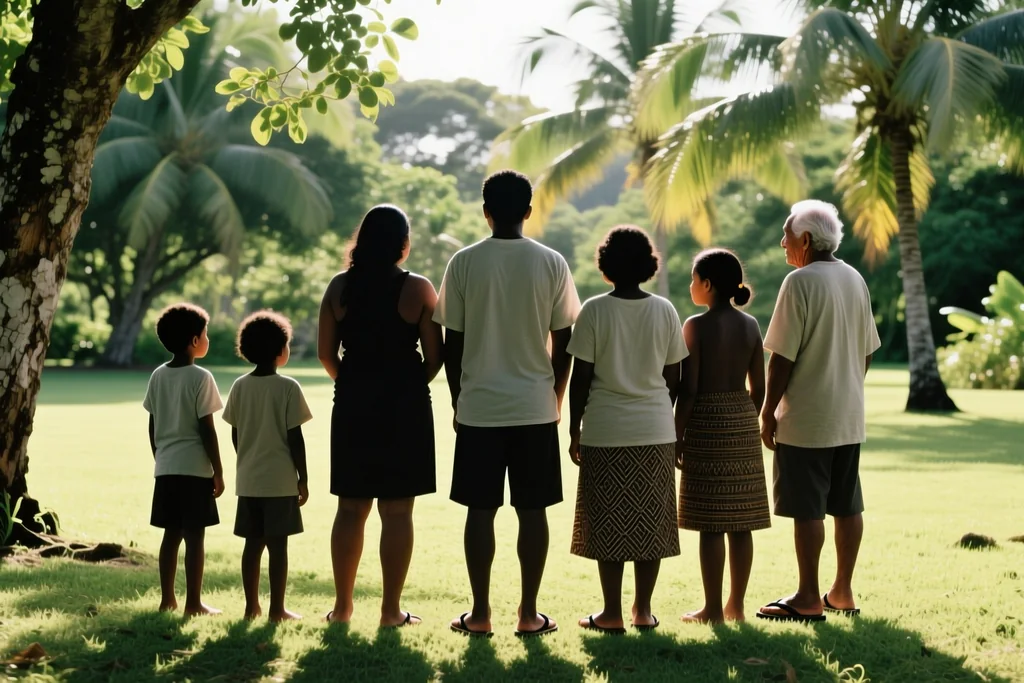
Understanding that diversity matters practically. A trans person navigating identity documents, a young person rejected by family, and an older person living with HIV face very different obstacles, and a programme designed for one will not necessarily serve the others. Who We Are is intended to be read as a starting point for that nuance rather than a substitute for listening to people directly.
Down By The River
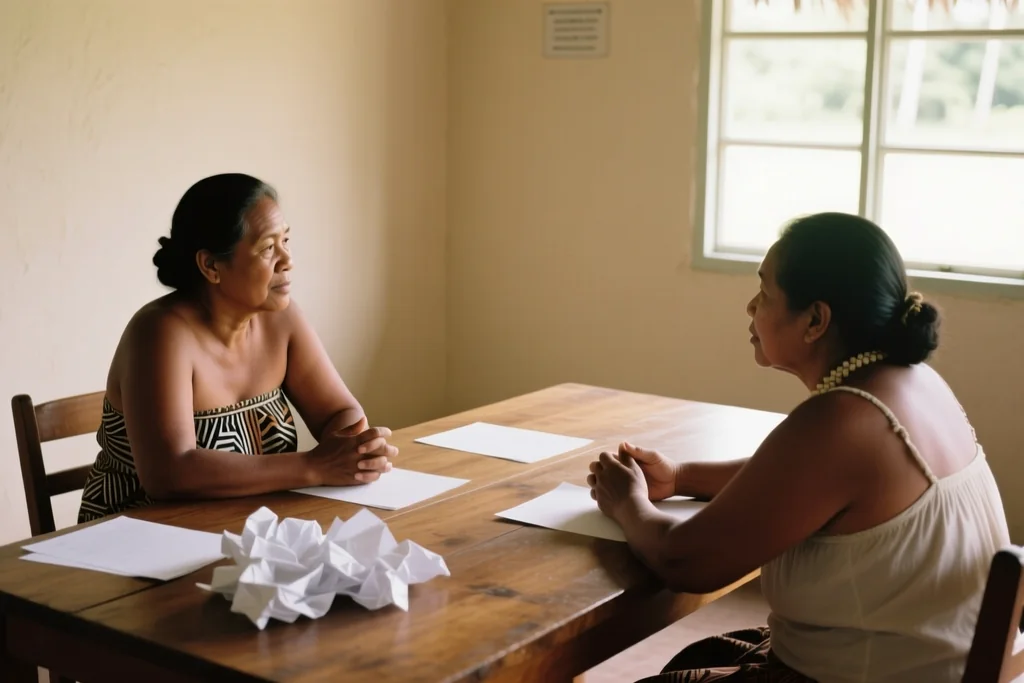
Down By The River is a storytelling and reflection resource built around the experiences of community members in their own words. Storytelling matters because statistics rarely convey what exclusion feels like in daily life — being turned away from a clinic, losing a job, or having to choose between family and honesty. It also matters because shared stories build solidarity across differences.
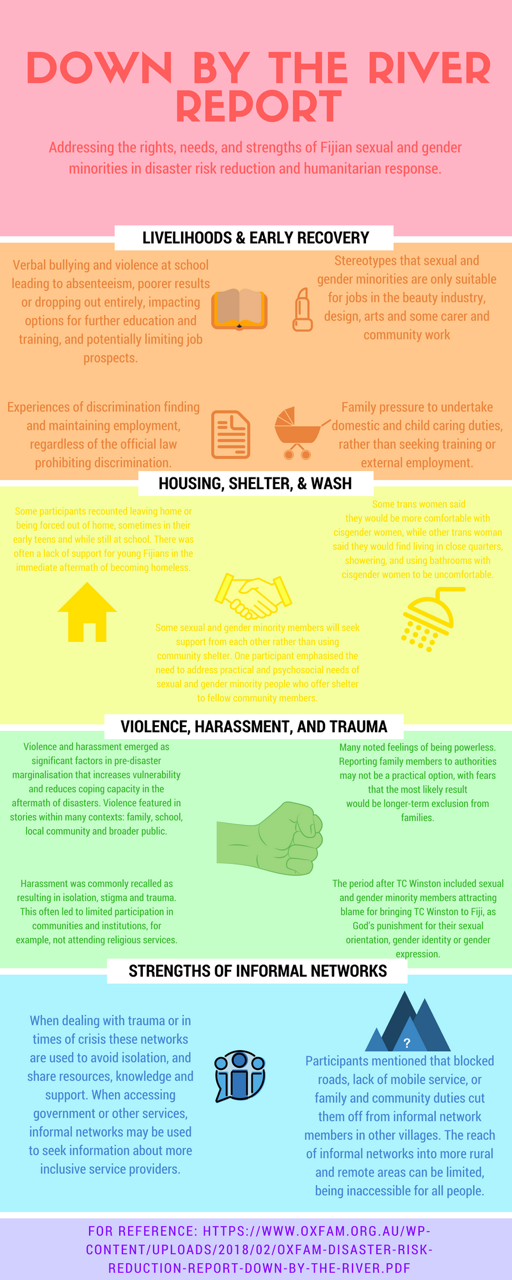
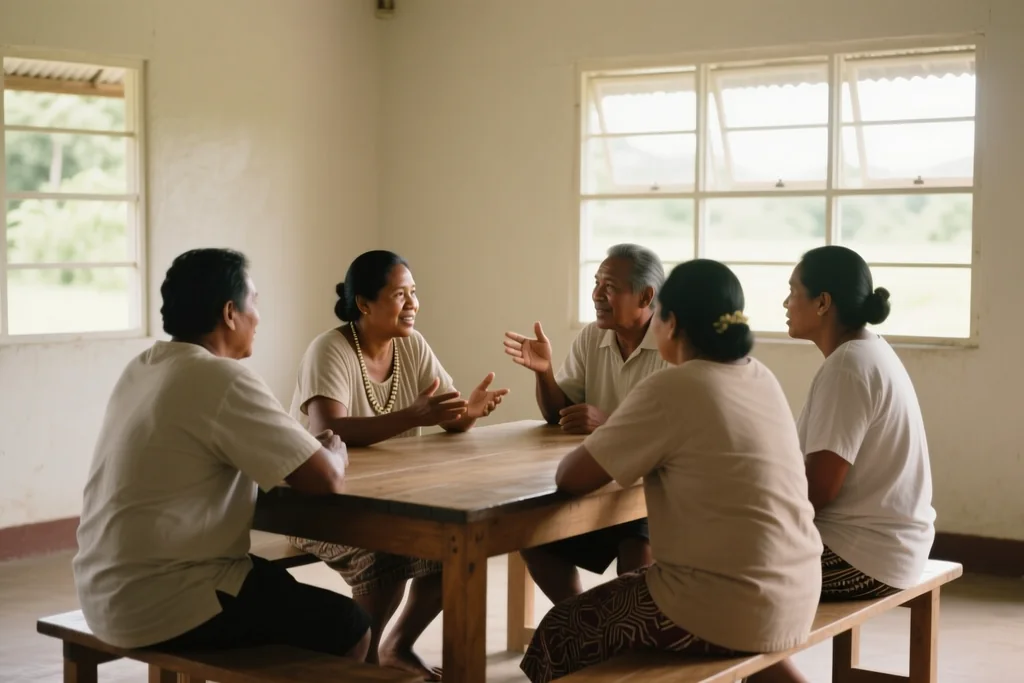
The resource is used in community sessions, where participants read, respond and contribute their own accounts. Facilitators do not steer people towards particular conclusions; the point is to create a space where experience can be voiced without judgement and where common patterns can emerge on their own.
Reflections
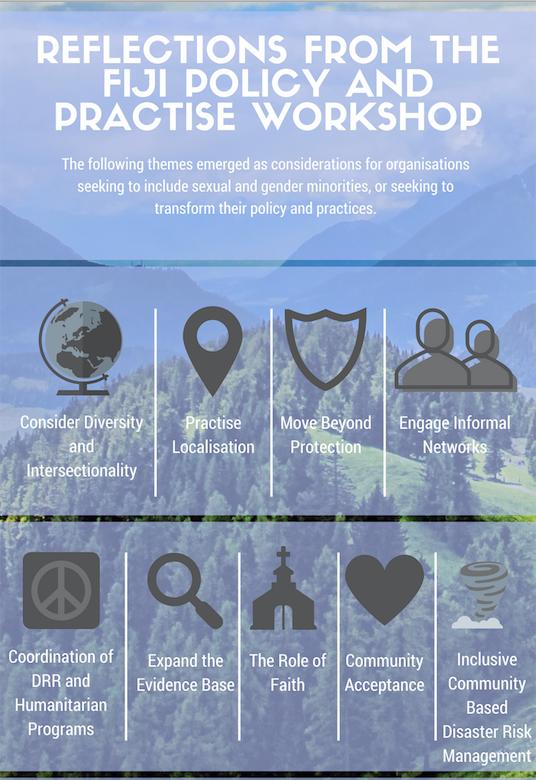
Reflections records what the organisation has learned from its programmes: what worked, what did not, and what the community told us to do differently. It draws on workshops, consultations, monitoring visits and analysis sessions, and it is written to be useful rather than flattering. Where a programme underperformed, Reflections says so.

Recommendations
Recommendations sets out the practical changes the foundation believes would improve the lives of LGBTIQ people in Fiji. They are addressed to service providers, employers, educators, faith communities, government agencies and international partners, and they are deliberately concrete: a recommendation that cannot be acted on is not much use to anyone.
How to use these resources
The table below suggests which part of the resources section is most useful depending on who you are and what you need.
| If you are… | Start with | Why |
|---|---|---|
| A community member or ally | Who We Are, Down By The River | Language, context and shared experience |
| A service provider | Recommendations | Concrete steps towards more inclusive services |
| A teacher or youth worker | Who We Are | Background before running sessions with young people |
| A partner or funder | Reflections and Recommendations | What has been learned and what it implies |
| A fellow organisation | All four parts | Shared language for joint advocacy |
Using the material responsibly
- Treat the personal stories as belonging to the people who told them. Do not republish them out of context.
- Do not use community members' experiences to illustrate a point they did not make.
- Confirm dates, figures and programme details through our official channels before citing them.
- If you adapt the material for a different setting, check that the adaptation does not distort the original.
If you would like a resource in a different format, or would like the foundation to run a session with your team, please get in touch. Making this material usable is part of the work.