
The Rainbow Pride Foundation works across five connected programme areas. They are connected because the problems they address are connected: a person who cannot access respectful healthcare is more likely to lose work, and a community displaced by a cyclone often loses the networks that made it safe in the first place. This page describes each area, what activity looks like on the ground, and how the areas reinforce one another.
Rights and advocacy
Our rights work combines human rights education with practical advocacy. Community members learn what protections exist, how decisions are made, and how to raise concerns effectively. Alongside that, the foundation engages in national and regional processes — consultations, reviews, workshops with public institutions — where policy that affects LGBTIQ people is discussed.
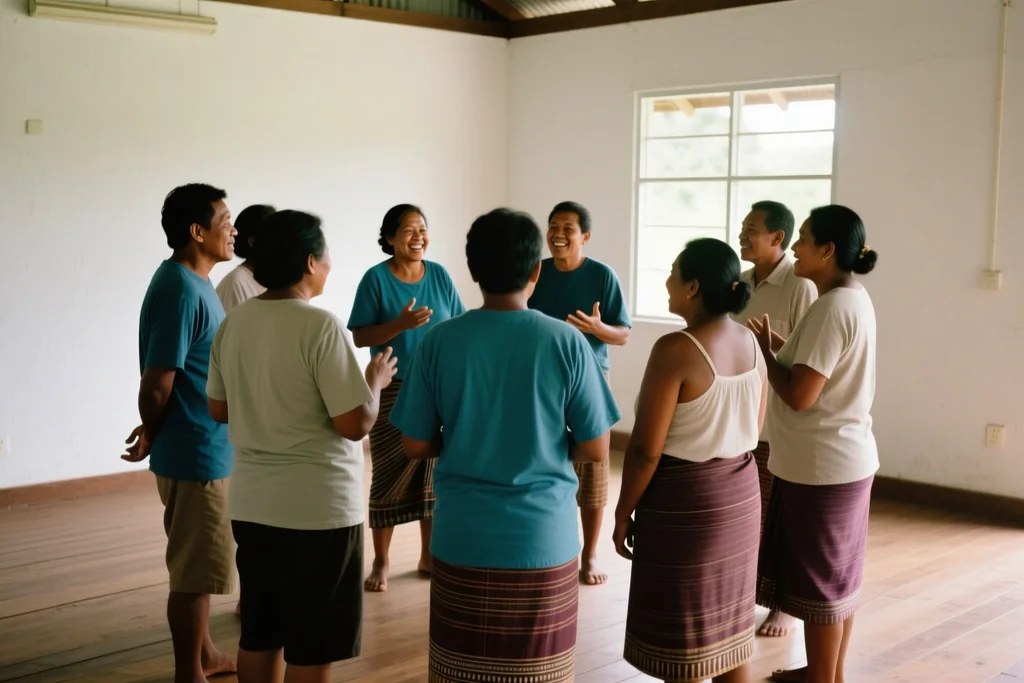
Advocacy is not only about speaking to power. Much of the most durable work happens when public institutions invite the community into their own planning. We therefore invest in relationships with service providers, educators and officials, and we document what those relationships produce so that lessons can be shared.
Health and wellbeing
Health programming focuses on HIV prevention, testing and support, on reducing stigma in clinical settings, and on the broader wellbeing of people who have been excluded from services. Peer educators carry accurate information into the community, and the foundation works with health partners to make services friendlier and more accessible.
Wellbeing is treated as more than the absence of illness. Isolation, family rejection and discrimination all affect health, and programmes are designed with that reality in mind. Where a participant needs support beyond the scope of a workshop, the foundation refers them to appropriate services and follows up.
Social justice and gender-based violence
Addressing violence requires both awareness and systems. The foundation supports campaigns that draw public attention to gender-based violence, runs sessions that help participants recognise harmful patterns, and works to ensure that reporting pathways are understood. We also contribute to national conversations about prevention rather than only response.
Climate justice and resilience
Fiji sits on the front line of climate change, and disasters do not affect communities evenly. LGBTIQ people can be pushed to the margins of evacuation centres, excluded from decision-making about relocation, or overlooked entirely in assessments. Our climate work aims to put inclusion into disaster risk reduction, relocation planning and community resilience from the beginning rather than retrofitting it after an event.
Economic empowerment
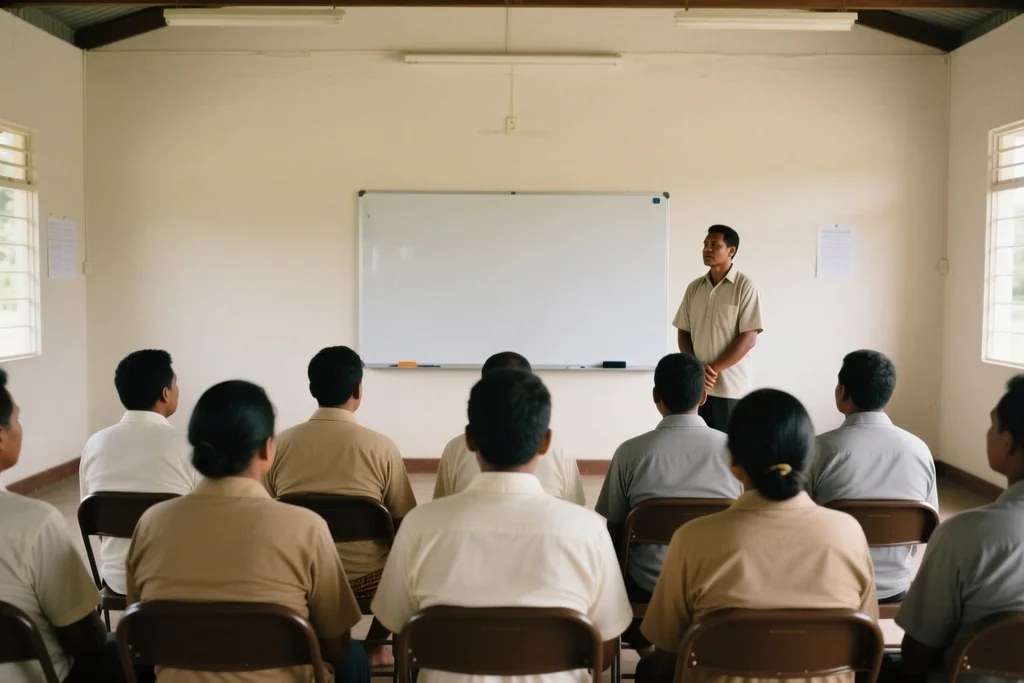
Economic independence reduces vulnerability in a very direct way: it gives people the option to leave an unsafe situation, to refuse degrading treatment, and to plan for the future. The foundation works with partners to promote equal access to sustainable livelihoods, economic assets and resources, and to address the practical barriers that keep LGBTIQ people out of education, training and employment.
Programme areas at a glance
The table below summarises the focus of each programme area and the kind of activity it involves.
| Programme area | Focus | Typical activity |
|---|---|---|
| Rights and advocacy | Non-discrimination, legal literacy, inclusion in policy | Workshops, consultations, submissions, coalition building |
| Health and wellbeing | HIV, stigma, access to respectful services | Peer education, referrals, service-provider engagement |
| Social justice | Gender-based violence and exclusion | Awareness campaigns, community sessions, advocacy |
| Climate justice | Inclusive disaster risk reduction and relocation | Learning events, community planning, tools and checklists |
| Economic empowerment | Livelihoods, skills, access to resources | Skills sessions, partner programmes, referrals |
Working in partnership
None of this work is done alone. The foundation collaborates with government ministries, civil society organisations, regional bodies, universities and international partners, and contributes to joint initiatives where a shared approach is stronger than separate ones. Partnership also means being candid about capacity: we take on what we can deliver well, and we say so when something is beyond our current reach.
Organisations interested in collaborating on a specific programme should contact the team to discuss scope, timing and safeguarding requirements. Programme cycles and focal points change, so please confirm current arrangements with us directly.