
Relocation is one of the hardest adaptations a community can face. When a village moves because of coastal erosion, flooding or repeated storm damage, it is not only buildings that are lost. Land, graves, fishing grounds, kinship networks, schools and the routines that make childhood stable all move or vanish with it. For children, relocation is a discontinuity that can shape an entire life — and it is almost never planned with children specifically in mind.
A child safety checklist is a practical attempt to change that. It does not solve relocation, and it does not pretend that moving is desirable. It simply asks the questions that need answering before, during and after a move, so that children are not left to absorb the consequences of decisions made without them.
What climate-induced relocation involves
Relocation is a process rather than an event. It begins long before a move, with repeated damage, mounting costs and the growing recognition that staying is no longer viable. It continues through the mechanics of land, consent, construction and services, and it extends for years afterwards as families rebuild livelihoods and children settle into unfamiliar schools and communities.
Because the process is long, the risks are cumulative. A short disruption is survivable; repeated disruption during the years when a child's education and social development are most sensitive is something else entirely.
The risks children face
Children experience relocation differently from adults, and the differences are predictable. They lose peer networks at the point when those networks matter most. They often change schools, sometimes into systems that are not prepared for them. They may take on caregiving or income-earning roles that reduce their time for education. In the worst cases, disruption weakens the protective relationships that keep children safe.
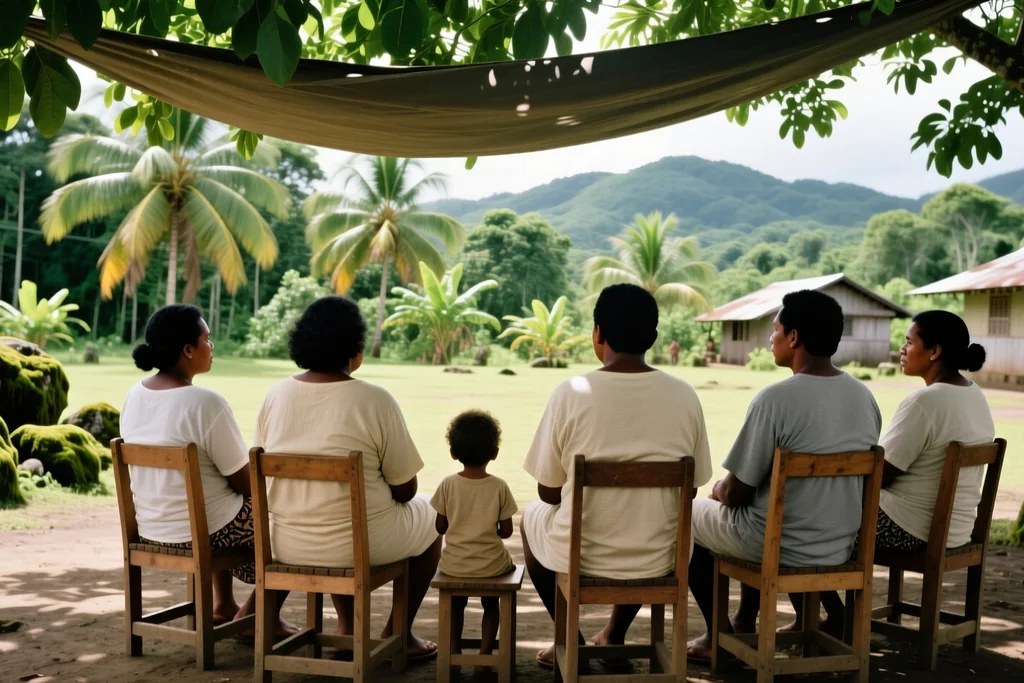
Some children are more exposed than others. Households headed by women, households with a member living with a disability, and families already marginalised because of gender identity or sexual orientation tend to have fewer buffers and less influence over decisions. Relocation can intensify existing exclusion rather than creating it from nothing.
What the checklist asks
The checklist is organised around the stages of the process and the questions that are most often skipped. Rather than producing a fixed answer, it prompts the people planning a move to record what they have considered.
- Have children been consulted, in age-appropriate ways, about the move and their concerns?
- Is schooling continuity planned, including enrolment, transport and language of instruction?
- Are health services, including immunisation and mental health support, available at the new site?
- Are child protection arrangements in place, and does anyone hold responsibility for them?
- Do the most marginalised families have a voice in the relocation process?
- How will families be supported in the first year after the move, not only on moving day?
Safeguards that make a difference
The table below pairs the main risk areas with the safeguard that most directly addresses each one.
| Risk area | Practical safeguard |
|---|---|
| Educational discontinuity | Plan enrolment and transport before the move, not after |
| Loss of peer networks | Support social activities and continuity for peer groups |
| Health and psychosocial needs | Confirm service availability and referral pathways at the new site |
| Added caregiving burden | Monitor whether children are taking on adult responsibilities |
| Exclusion of marginalised families | Ensure decision-making includes the least powerful households |
| Long-term recovery | Provide follow-up support for at least the first year |
Why inclusion belongs in the checklist
Disaster planning frequently quantifies households while overlooking who is inside them. A household count does not reveal whether a young person has been rejected by their family, whether a trans person will be safe in a shared evacuation centre, or whether a same-sex couple will be treated as a unit when entitlements are allocated. If those questions are not asked at the planning stage, they are answered by default — usually badly.
Using the checklist
The checklist is designed to be used by community committees, provincial planners, schools, health services and organisations supporting relocation, and to be adapted to local circumstances. It is a starting point for a conversation, not a certification scheme.
Communities and agencies that would like to use or adapt it are welcome to contact the foundation, which can also advise on how to consult children safely and how to include the most marginalised households in planning. Because relocation policy and support arrangements change, current guidance should be confirmed through official government and agency channels.