
Governance is not the most visible part of a community organisation, and it is one of the most decisive. How a board is composed, how it takes decisions, how it handles disagreement and how it reports back to the community it exists to serve determine whether an organisation stays anchored or drifts towards whatever is easiest to fund. The foundation's 2025 board meeting was an opportunity to review that machinery honestly and to set priorities for the year ahead.
Why governance matters to a community organisation
A community organisation holds something that is not its own: the trust of the people it represents. That trust is easy to spend and hard to rebuild. Governance is what converts trust into accountability, and it is why the foundation's board includes people drawn from the community as well as people with relevant professional experience. Neither alone is sufficient.
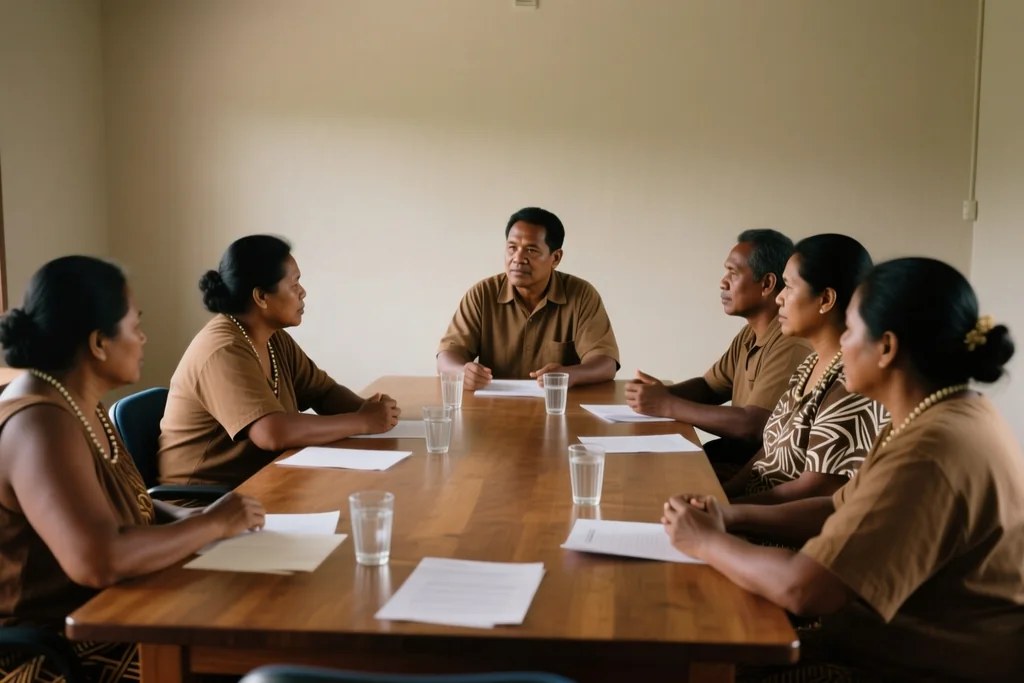
Priorities reviewed
The meeting examined the organisation's strategic direction, programme delivery, financial management and safeguarding practice. Underlying all of them was a recurring question: is the foundation still doing what its community needs, or has it drifted towards what is easiest to measure?
- Strategic direction and the balance between programme areas.
- Programme delivery against plan and lessons from monitoring.
- Financial management, controls and reporting obligations.
- Safeguarding policy, training and escalation pathways.
- Community engagement and how feedback reaches the board.
- Leadership succession and the strength of the secretariat.
Insights from the discussion
Three themes stood out. First, breadth is a strength only when it is deliberate. Working across rights, health, climate and livelihoods allows the foundation to respond to how exclusion is experienced in practice, but it also spreads a small team thinly. The board spent considerable time on how to keep breadth without losing depth.
Second, accountability has to be bidirectional. The foundation reports to funders because it must, and to its community because that is its purpose. Making the second kind of reporting as systematic as the first is harder and more important.
Third, leadership development is a governance issue, not just an HR one. An organisation whose knowledge lives in a few individuals is fragile, however capable those individuals are.
Decisions and directions
The table below summarises the areas discussed and the direction agreed.
| Area | Issue considered | Direction agreed |
|---|---|---|
| Strategy | Breadth versus depth of programme areas | Prioritise coherence and avoid spreading too thin |
| Accountability | Community reporting is less systematic than funder reporting | Strengthen community-facing reporting |
| Leadership | Knowledge concentrated in few individuals | Invest in development and succession planning |
| Safeguarding | Consistency of practice across activities | Reinforce training and escalation pathways |
| Partnerships | Managing joint activity without losing focus | Be clear about what each partnership is for |
What this means for the year ahead
Governance conversations rarely produce dramatic announcements, and that is not a defect. The value lies in the accumulation of small corrections: a clearer reporting rhythm, a better-defined role for each programme area, a stronger pipeline of people able to carry responsibility. These are the changes that determine whether an organisation is still capable of its mission in five years' time.
Community accountability
The foundation's mandate comes from the community, and the board treats that as an obligation rather than a slogan. Community feedback reaches the board through programme reporting, reflection sessions and direct engagement, and where that feedback conflicts with a plan, the plan is expected to move.
Details of governance arrangements, board composition and reporting practices are confirmed through the foundation's official channels; anyone seeking current information should contact the secretariat directly.