
Monitoring visits are sometimes treated as an administrative obligation: a checklist, a set of photographs, a report filed and forgotten. Done properly, they are something closer to a conversation about whether a programme is actually doing what it promised, and they frequently surface information that no report from a desk would capture. This note summarises the insights from a project monitoring visit connected to a Canadian Fund for Local Initiatives supported project.
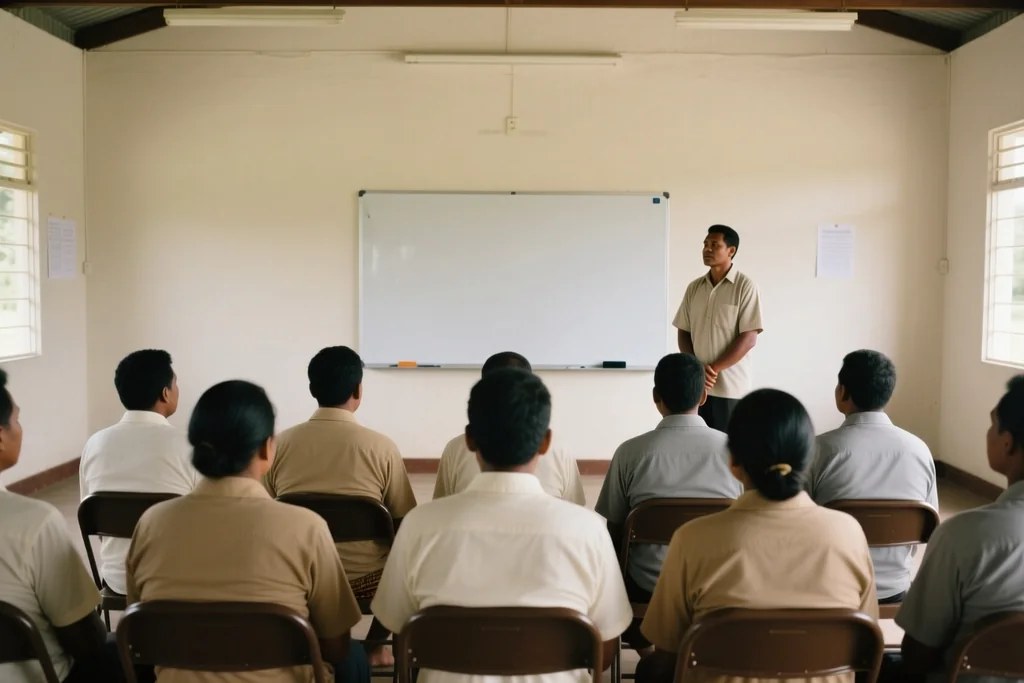
The visit brought together the foundation's team with partners and community participants to review progress against plan, examine what had changed on the ground, and agree what needed adjusting.
Why monitoring is part of the work, not separate from it
A programme that is not monitored drifts. Communities change, staff change, seasons and weather interfere, and an activity that made sense at design stage can become awkward or even counterproductive in practice. Monitoring exists to catch that drift early, while adjustments are still cheap.
It also serves accountability. Community members who give their time to a programme are entitled to know what happened to it, and funders are entitled to know whether their contribution produced what was proposed. Honest monitoring is the mechanism that makes both possible.
What the visit examined
The review looked at delivery against the agreed plan, participation and reach, the quality of activities, and the practical obstacles that had appeared since the project began. Each element was discussed with people who had taken part, not only with those who had organised it.
- Whether planned activities took place, and where timings shifted.
- Who participated and who was missing from the room.
- What participants found useful, and what they found difficult.
- How resources and materials were used in practice.
- What should be carried into the next phase, and what should stop.
Insights that emerged
Several themes came through consistently. First, flexibility in scheduling mattered more than the team had expected: sessions that worked for urban participants did not always work for those travelling from further afield, and small adjustments to timing had a large effect on attendance. Second, word of mouth was the most effective recruitment channel, which reinforced the value of working through community networks rather than broadcast invitations alone.
Third, participants valued sessions that connected a topic to their own daily circumstances. Abstract presentations were less useful than practical, locally grounded discussion, even when the underlying content was the same. Fourth, the follow-up that happened after an activity often mattered as much as the activity itself, because that was where referrals, questions and further engagement took place.
Adjustments agreed
The table below sets out the main observations and the response agreed for the next phase.
| Observation | Response agreed |
|---|---|
| Scheduling did not suit participants travelling from outside town | Adjust timing and provide notice further in advance |
| Word of mouth drove most participation | Invest further in community network outreach |
| Practical, locally grounded content was most valued | Adapt session design towards applied discussion |
| Follow-up after activities carried much of the value | Build follow-up time into activity planning |
| Some groups were under-represented | Identify specific barriers and address them directly |
What the visit changed
The most useful outcome was not a finding but a shift in emphasis. The review confirmed that the programme's value lay less in individual events than in the relationships those events created and sustained. That has implications for how the work is resourced: if continuity is what produces results, then follow-up cannot be treated as an optional extra squeezed in at the end.
Looking ahead
Monitoring is only useful if it changes something. The foundation intends to carry these insights into the design of future activities and to keep reviewing them with the community rather than in isolation. Where a recommendation cannot be implemented, the team would rather explain why than quietly drop it.
Because project arrangements and reporting requirements change over time, anyone seeking current information about this project should confirm details directly through the foundation's official channels.