
Access to land, training and markets is not usually described as an LGBTIQ rights issue, yet for many people in Fiji it is exactly where exclusion becomes concrete. A person who is pushed out of a family farm, refused a place in a training cohort, or excluded from a cooperative cannot build the economic independence that makes every other right easier to claim. That is why the Rainbow Pride Foundation's conversations with the Ministry of Agriculture matter more than they might first appear.
The collaboration focused on a straightforward question: how can agricultural programmes reach LGBTIQ people in rural and peri-urban communities, and what barriers stand in the way? Answering it required both institutions to look at their own practice rather than at each other.
Why livelihoods belong in a rights agenda
Economic empowerment is one of the foundation's core mandate areas, and it is not a separate agenda from rights work. Financial dependence keeps people in unsafe households, narrows their options when they face discrimination, and makes it harder to leave a workplace that treats them badly. Conversely, a steady income changes the terms of every negotiation a person has with their family, their community and their government.
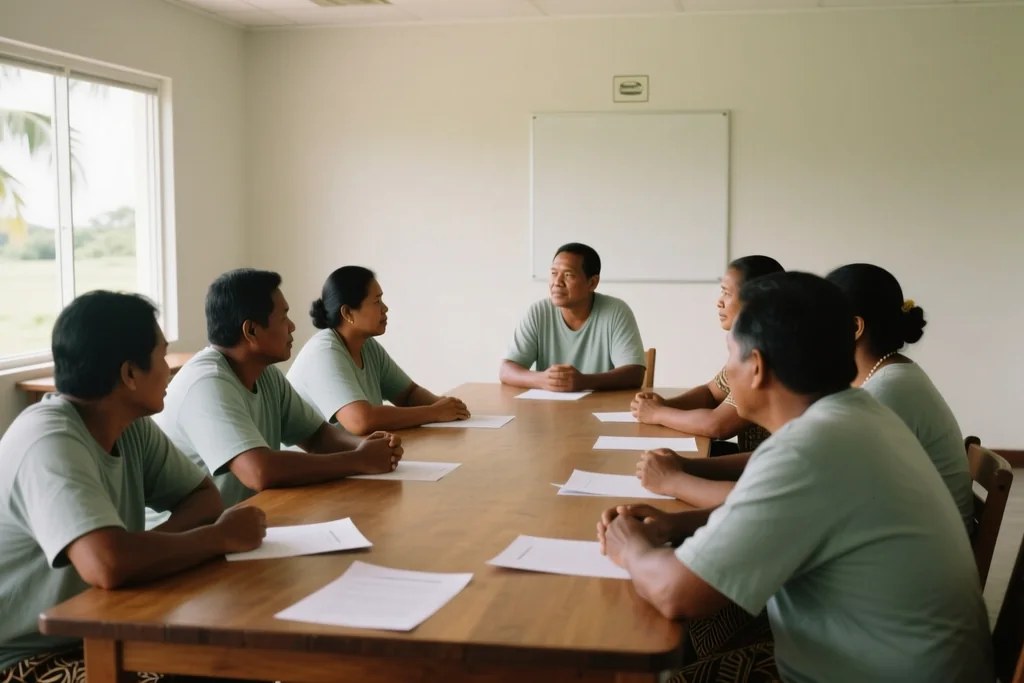
Agriculture is central to that picture in Fiji. It employs a large share of the population, particularly outside the main urban centres, and it is often the family economy rather than an individual career. Interventions that reach farming households therefore reach people who might never appear in a services directory or attend a workshop in town.
What the collaboration set out to do
The aim was not to create a separate programme for LGBTIQ farmers. It was to make existing programmes genuinely accessible, and to give extension and programme staff the confidence and information they need to serve everyone. That distinction matters: segregated provision can be easier to organise, but it rarely achieves equality.
- Review how agricultural services are communicated and whether outreach reaches marginalised households.
- Identify practical barriers — documentation, family consent, physical safety, social pressure — that limit participation.
- Consider how training cohorts can be made safer and more inclusive without singling people out.
- Agree how the two institutions will keep each other informed and follow up.
The barriers that surfaced
Discussions pointed to a set of barriers that were rarely about the formal rules. Eligibility criteria were often open in principle, but practical requirements — such as needing a registered household title, or being nominated by a community body — quietly excluded people who had been pushed to the margins of family structures. Even where access was technically available, the social cost of attending could be high enough to make it not worth the risk.
The foundation also noted that stigma is not only interpersonal. Where staff are unsure how to respond to an LGBTIQ participant, the safest-seeming option is often silence, and silence reads as rejection. Training and clear guidance therefore matter as much as formal policy.
Practical steps and follow-up
The collaboration produced a set of practical directions, including clearer messaging about who programmes are for, more attention to confidentiality, and agreement to keep the dialogue open as programmes evolve. The table below summarises the main theme of each discussion and the direction agreed.
| Discussion theme | Barrier identified | Agreed direction |
|---|---|---|
| Outreach and messaging | Information does not reach marginalised households | Review channels and use community networks |
| Eligibility requirements | Practical conditions exclude indirectly | Examine criteria for unintended exclusion |
| Safety at training | Attendance can carry social risk | Consider confidentiality and group composition |
| Staff confidence | Uncertainty produces silence | Provide guidance and awareness sessions |
| Follow-up | Goodwill fades without structure | Keep a regular point of contact |
What good partnership looks like
Partnership between a community organisation and a government ministry is not a publicity exercise; it is a working relationship that has to survive changes in personnel, priorities and budgets. What made this collaboration useful was its specificity. Neither side settled for a general statement of support. Both were willing to discuss how a programme is actually run, where people fall through, and what would have to change.
The foundation's view is that this kind of engagement is slow but cumulative. Each conversation makes the next one easier, and the institutions involved gradually build the internal knowledge that outlasts any individual project.
Next steps
The foundation intends to continue working with agricultural and rural development partners on inclusion, and to keep linking livelihoods work with the wider rights agenda. Communities that would like the foundation to raise a specific barrier with a service provider are encouraged to get in touch.
Programme details, focal points and timelines change, so anyone seeking current information about this or any other collaboration should confirm it directly through the foundation's official channels rather than relying on this summary.